When a technician connects a diagnostic scanner to your vehicle, it can seem like they're simply reading a code from a computer. The reality is more involved than that. Modern automotive diagnostics is a layered process — one that combines electronic data, technical knowledge, and real-world testing to understand what's actually happening inside a vehicle. This article explains how the process works and what it means for you as a vehicle owner.
A Brief History: Why OBD-II Exists
Before standardized diagnostic systems, troubleshooting a vehicle relied almost entirely on a technician's experience and physical inspection. Different manufacturers used proprietary systems with no common language between them.
In 1996, the United States mandated OBD-II (On-Board Diagnostics, second generation) as a standard across all passenger vehicles sold domestically. Canada adopted the same standard shortly after. OBD-II created a universal diagnostic port and a standardized set of fault codes, allowing any compatible scanner to communicate with any compliant vehicle. It was initially driven by emissions compliance goals — making it easier for inspectors to verify that emissions systems were functioning — but it evolved into a much broader diagnostic tool.
Today's vehicles go well beyond the original OBD-II spec. Most modern cars have multiple control modules managing everything from the engine to the transmission, brakes, suspension, climate control, and body systems — each one logging data and capable of setting fault codes.
What Diagnostic Trouble Codes Actually Mean
When the vehicle's onboard systems detect a parameter that's out of range, they store a Diagnostic Trouble Code (DTC) in memory and, depending on the severity, illuminate a warning light on the dashboard. These codes follow a standardized format:
- The first character identifies the system: P for powertrain, B for body, C for chassis, U for network/communications.
- The second digit indicates whether the code is generic (0) — meaning it's the same across all manufacturers — or manufacturer-specific (1, 2, or 3).
- The remaining digits identify the specific fault.
For example, P0300 is a generic powertrain code for "Random/Multiple Cylinder Misfire Detected." P0420 indicates "Catalyst System Efficiency Below Threshold (Bank 1)" — which is why that code often comes up in discussions about catalytic converters.
A critical point: a DTC tells you what the system detected as out of range, not necessarily why. P0420, for instance, can be caused by a failing catalytic converter, but also by a faulty oxygen sensor, an exhaust leak upstream of the sensor, or certain fuel system conditions. The code is the starting point, not the conclusion.
The Diagnostic Process: Step by Step
Step 1 — Initial Scan
The technician connects a scan tool to the OBD-II port and retrieves all stored DTCs across the vehicle's modules. This gives a map of what the systems have flagged — both current faults and historic ones that may have self-cleared.
At this stage, the technician also reviews freeze frame data — a snapshot of operating conditions (engine RPM, coolant temperature, load, vehicle speed, etc.) that were recorded at the moment the fault was detected. This context is often as useful as the code itself.
Step 2 — Live Data Review
Modern scan tools can display real-time data from dozens of sensors simultaneously. A technician may monitor oxygen sensor voltage, fuel trim values, mass airflow readings, ignition timing, and throttle position — all while the engine is running. This live data view lets them see not just what the sensor reported as a fault, but how the system is behaving dynamically.
For example, if a misfire code is present but only appears at idle, live data can show which cylinder is misfiring and whether the pattern correlates with a specific condition (cold starts, load, etc.). This significantly narrows the diagnosis.
Step 3 — Component Testing
Once data has pointed toward a probable cause, the technician often performs targeted component tests. This might involve:
- Voltage and resistance testing with a multimeter to verify sensor output against specification.
- Fuel pressure testing to confirm the fuel system is delivering the correct pressure under various conditions.
- Compression testing to evaluate cylinder health if engine mechanical issues are suspected.
- Leak-down testing to identify whether compression loss is from valves, rings, or a head gasket.
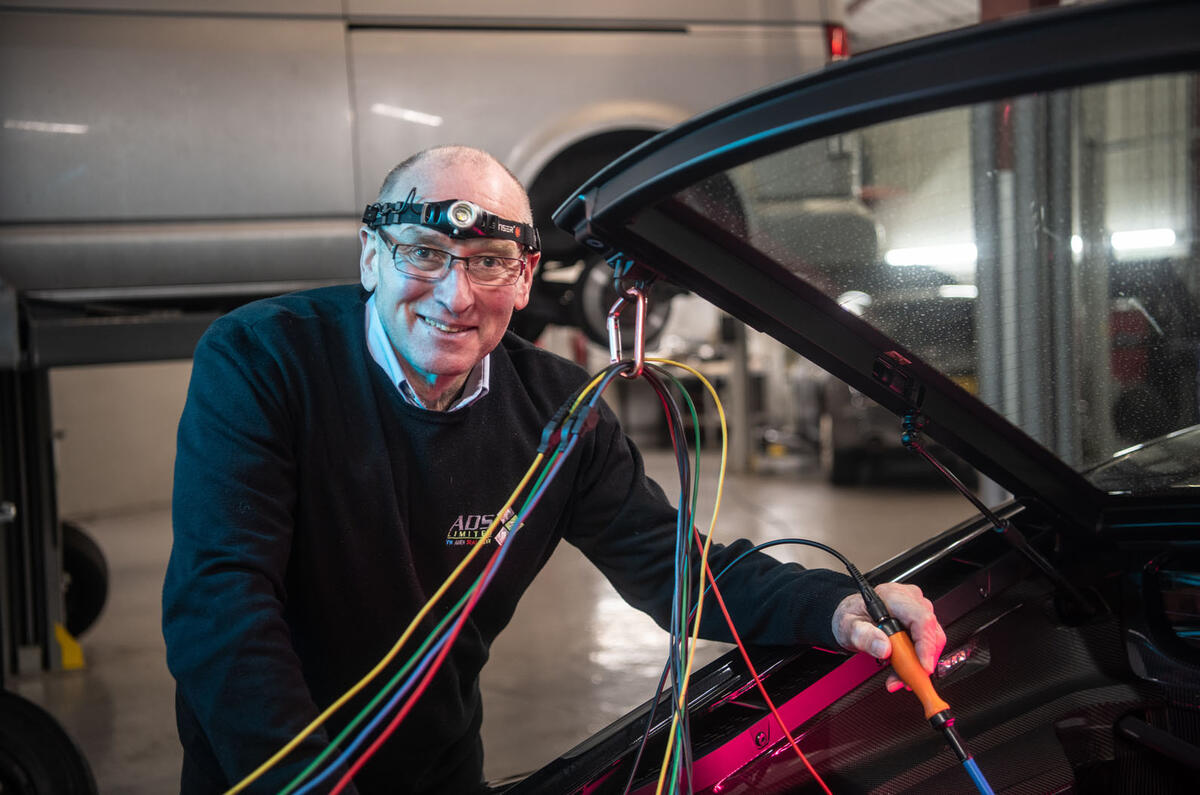
- Oscilloscope testing for complex signals — like crankshaft position sensor waveforms — where the pattern of the signal matters, not just the voltage.
This step is where technical experience becomes critical. The equipment generates data, but interpreting it against the vehicle's specific architecture and known failure patterns requires knowledge that goes beyond reading numbers.
Step 4 — Road Testing and Verification
Some faults only appear under specific driving conditions — highway speeds, hard acceleration, or after the engine reaches operating temperature. A road test with a scan tool connected (or a data logger running) allows the technician to reproduce the fault under real conditions and observe how the system responds.
This step is also essential after repairs. Clearing a code and confirming the vehicle passes a drive cycle (a standardized set of operating conditions that allow the OBD monitors to run their checks) is how a technician verifies that the repair addressed the root cause.
"A code tells you where to look. It doesn't tell you what to replace. That distinction matters — and it's what separates a proper diagnosis from a parts-swapping exercise."
The Difference Between a Scan and a Diagnosis
This distinction is worth dwelling on. Many parts stores offer free code scanning — which retrieves the stored DTCs and often gives a component suggestion based on the code alone. This can be useful for awareness, but it's not a diagnosis.
A diagnosis is the process of identifying the root cause with sufficient confidence to repair it. It involves the steps above — data review, component testing, drive cycle verification — and the professional judgment to interpret all of it correctly. The difference matters practically: a parts-and-hope approach to a P0420 code might result in replacing a catalytic converter when the actual cause was a faulty O2 sensor upstream. The code returns, the expense was unnecessary, and the real issue still exists.
Advanced Diagnostic Systems: Beyond OBD-II
Many current vehicles use proprietary enhanced diagnostic protocols that go beyond the standardized OBD-II spec. These require manufacturer-specific scan tools or licensed software to access fully. Enhanced diagnostics can cover:
- ABS/traction control module data and fault codes
- Transmission adaptive shift data and clutch pressure parameters
- Active suspension module calibration data
- Body control module inputs/outputs (door modules, lighting, HVAC)
- Advanced driver assistance system (ADAS) calibration status
Accessing this depth of data is one of the practical differences between having a vehicle diagnosed at a shop with appropriate equipment versus relying solely on a generic scanner.
What You Can Expect as a Vehicle Owner
A transparent diagnostic process should produce a clear explanation of what was found and why a repair is recommended. At minimum, you should know:
- Which codes or symptoms were present
- What testing was performed to identify the cause
- What the recommended repair addresses and why
- Whether there are any secondary findings worth monitoring
If a shop's diagnostic report doesn't include some version of this information, it's reasonable to ask for it. Understanding the reasoning behind a recommended repair isn't overstepping — it's part of making an informed decision about your vehicle.
Closing Thoughts
Automotive diagnostics has changed substantially over the past two decades, and it continues to evolve as vehicles add more electronic systems and connectivity. But the core logic of the process remains the same: gather data, interpret it correctly, test your hypothesis, and verify the repair. The equipment has become more sophisticated, but the need for informed human judgment at each step hasn't diminished — it's become more important. Understanding this process helps you have better conversations with your shop and make more confident decisions about your vehicle.
Questions About Your Vehicle's Diagnostics?
At Hardinge Repair, we walk you through our findings before recommending any repairs. Reach out to us in Victoria, BC if you'd like to understand more about what we found or what a diagnostic involves.
Contact Hardinge Repair